ATV Tire Size Guide: A Comprehensive Overview (Updated 02/15/2026)
Navigating ATV tires requires understanding sizes, circumferences (in mm & cm), and brand specifics like ITP Trac Star and Torque TQ022.
Understanding ATV Tire Sizes
Deciphering ATV tire sizes is crucial for optimal performance and safety. Tire sizes aren’t arbitrary; they represent a coded system detailing width, height, and wheel diameter. For instance, a “21×7-10” tire indicates a 21-inch overall diameter, a 7-inch width, and fits a 10-inch wheel.
Accurate measurement is paramount, as even slight variations can impact handling and gear ratios. Always double-check measurements before purchasing replacements, noting potential manual measurement discrepancies (around 0.1-0.5cm). Understanding these dimensions allows riders to select tires suited to their ATV model, riding style, and terrain conditions. Referencing charts detailing tire circumferences, expressed in both millimeters and centimeters, aids in precise calculations.
Decoding Tire Markings: A Detailed Breakdown
ATV tire markings contain vital information beyond just size. The sequence, like “21×7-10,” is fundamental, but other codes reveal crucial details. Manufacturers often include production dates and unique identification numbers for traceability. Examining these markings ensures you’re receiving the correct tire specification.
Pay close attention to load ratings and speed symbols, indicating the tire’s capacity and safe operating limits. Catalog numbers, such as “59-0686” for an ITP Trac Star, are essential for ordering replacements. Note any specific tire descriptions or notes provided by the manufacturer. Careful review of these markings, alongside size measurements, prevents errors and guarantees compatibility with your ATV.
Standard ATV Tire Sizes by Application
Selecting the right ATV tire size hinges on its intended use. Utility ATVs generally favor sizes like 25×8-12, 26×9-12, and 27×9-12, prioritizing traction and load capacity for work tasks. Sport ATVs often utilize smaller, lighter tires – 21×7-10, 22×7-10, and 23×8-10 – enhancing agility and performance.
Mud tires frequently deviate from standard sizes, opting for larger diameters and aggressive tread patterns. Understanding these application-specific preferences is crucial. Always verify compatibility with your ATV’s specifications. Consider factors like terrain, riding style, and desired performance characteristics when choosing a tire size. Accurate measurements and referencing manufacturer guidelines are paramount for optimal results.
Sport ATV Tire Sizes
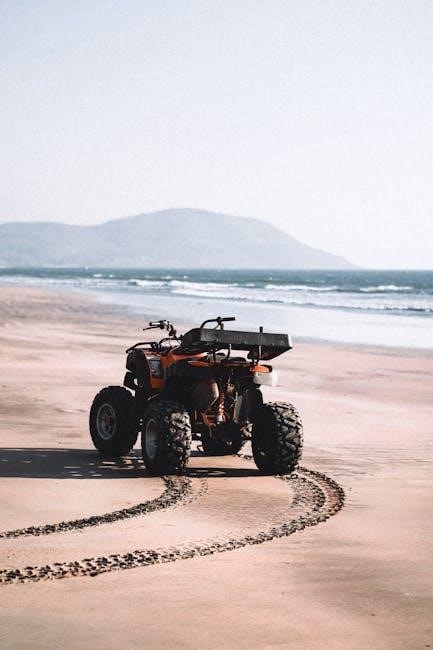
Sport ATVs benefit from tires like 21×7-10, 22×7-10, and 23×8-10, designed for quick handling and peak performance on varied terrains.
21×7-10: Common Sizes and Uses
The 21×7-10 tire size is exceptionally common, particularly for sport ATVs and smaller utility models. This size represents a tire with a 21-inch diameter, a 7-inch width, and fits a 10-inch wheel. It’s a versatile choice, offering a good balance between handling, comfort, and affordability.
You’ll frequently find this size utilized as original equipment on many ATV brands. The ITP Trac Star tire, for example, is readily available in 21×7-10, priced around 798.20 rubles (as of today’s date, 02/15/2026). This makes it an accessible option for replacements or upgrades.
This tire size is well-suited for general trail riding, dune riding, and recreational use. It provides adequate traction for most conditions, though it may not be ideal for extremely muddy or challenging terrain. Careful measurement is crucial before purchase, allowing for a 0.1-0.5cm variance due to manual measurement.
22×7-10 & 22×9-10: Performance and Terrain
Stepping up to 22×7-10 and 22×9-10 tire sizes introduces enhanced performance capabilities, particularly for sport-oriented ATVs. The 22-inch diameter provides slightly increased ground clearance, while the varying widths impact handling and traction. A 22×7-10 offers precise steering and quick responsiveness, ideal for hardpack trails and racing.
Conversely, the wider 22×9-10 delivers superior flotation in softer terrains like sand and mud. This increased contact patch enhances stability and reduces sinkage. Riders seeking a balance between agility and traction often gravitate towards this size.
Careful consideration of riding style and terrain is paramount. Remember to double-check size measurements before finalizing a purchase, accounting for potential 0.1-0.5cm discrepancies from manual measurements. These sizes represent a noticeable upgrade in performance compared to the 21-inch counterparts.
23×8-10 & 23×10-10: Aggressive Riding Options
For ATV enthusiasts demanding maximum performance and tackling challenging terrains, the 23×8-10 and 23×10-10 tire sizes represent a significant upgrade. These larger dimensions provide substantial gains in ground clearance and overall traction, making them well-suited for aggressive riding styles and demanding conditions.
The 23×8-10 offers a balanced approach, delivering improved handling and control, while the wider 23×10-10 maximizes flotation in loose surfaces like deep mud and sand. Riders prioritizing stability and minimizing sinkage will favor the wider option.
However, remember to verify precise size measurements before purchase, acknowledging potential manual measurement variations (0.1-0.5cm). These larger tires may necessitate suspension adjustments to maintain optimal handling and prevent rubbing. Careful consideration of your ATV’s capabilities is crucial.

Utility ATV Tire Sizes
Utility ATVs benefit from sizes like 25×8-12, 26×9-12/11-12, and 27×9-12/11-12, prioritizing traction, load capacity, and versatile performance.
25×8-12: Versatility for Work and Play
The 25×8-12 tire size represents a sweet spot for many utility ATVs, offering a fantastic balance between work-ready durability and recreational performance. This size is commonly found as original equipment on a wide range of machines, highlighting its versatility. The ’25’ indicates the tire diameter in inches, ‘8’ denotes the tire width in inches, and ’12’ signifies the wheel diameter in inches.
This configuration provides ample flotation for navigating various terrains without being overly aggressive for general trail riding or tasks around the farm. Riders can expect good traction in moderate conditions, making it suitable for hauling, towing, and tackling everyday chores. It’s a popular choice for those who need a tire that can handle both demanding work and enjoyable weekend rides. Consider this size for a reliable all-around performance.
26×9-12 & 26×11-12: Enhanced Traction and Load Capacity
Stepping up to 26-inch tires, specifically the 26×9-12 and 26×11-12 sizes, delivers noticeable improvements in both traction and load-carrying capacity for utility ATVs. The increased diameter provides better obstacle clearance, while the wider widths – 9 and 11 inches respectively – significantly enhance the tire’s footprint. This larger contact patch translates to superior grip on loose surfaces like mud, sand, and gravel.
These sizes are ideal for riders who frequently tow heavy loads, navigate challenging terrain, or require maximum stability. The 26×11-12, being wider, offers even greater flotation and traction, but may require checking for adequate fender clearance. Choosing between these options depends on your specific needs and ATV’s capabilities, prioritizing enhanced performance and durability.
27×9-12 & 27×11-12: Maximum Performance for Utility ATVs
For utility ATVs demanding peak performance, the 27×9-12 and 27×11-12 tire sizes represent the upper limit for many models. These larger tires provide the ultimate combination of obstacle negotiation, traction, and a more comfortable ride. The increased diameter further elevates ground clearance, allowing riders to confidently tackle even more demanding trails and work environments.
However, upgrading to these sizes often necessitates suspension modifications to maintain proper handling and prevent rubbing. The wider 27×11-12 offers exceptional flotation and stability, particularly beneficial in muddy or sandy conditions. Careful consideration of your ATV’s gearing and overall lift capacity is crucial when choosing these maximum-performance tire options, ensuring optimal functionality and safety.

Mud Tire Sizes & Considerations
Mud tires often deviate from standard sizes, frequently “going bigger” for enhanced traction. Size impacts performance, demanding careful evaluation for optimal mud handling.
Mud Tire Size Variations: Going Bigger
When venturing into muddy terrain, ATV enthusiasts often explore larger tire sizes to maximize traction and overcome challenging obstacles. This “going bigger” approach isn’t simply about aesthetics; it’s a functional upgrade designed to enhance performance in demanding conditions. Larger tires provide a greater contact patch, distributing the ATV’s weight over a wider area and reducing sinkage.
However, increasing tire size introduces considerations beyond just grip. It impacts gear ratios, suspension travel, and overall ATV handling. Riders must carefully assess these factors to ensure the larger tires complement their ATV’s capabilities and riding style. While a substantial increase in size can be beneficial, exceeding the ATV’s recommended limits can lead to decreased performance and potential damage. Careful planning and research are crucial when opting for larger mud tires.
Impact of Tire Size on Mud Performance
Tire size significantly influences an ATV’s ability to navigate muddy conditions. Larger diameter tires generally offer improved mud performance due to their increased ground clearance and larger contact patch. This allows the ATV to roll over obstacles rather than getting bogged down in them. Wider tires further enhance flotation, preventing the ATV from sinking into deep mud.
However, simply choosing the largest possible tire isn’t always the best strategy. Excessive tire size can negatively impact handling and potentially strain the ATV’s drivetrain. A balanced approach, considering the ATV’s power, suspension, and intended use, is essential. Tire tread pattern also plays a crucial role, working in conjunction with size to deliver optimal mud traction and self-cleaning capabilities.
Tire Circumference and Gear Ratio
Changes in tire size directly affect gear ratio; larger tires decrease it, while smaller tires increase it, impacting speed and torque output.
Tire Circumference Charts (mm & cm)
Understanding tire circumference is crucial for accurate speed readings and gear ratio calculations. Variations in tire size significantly alter the distance traveled per revolution. Below is a sample illustrating how tire size correlates to circumference, expressed in both millimeters (mm) and centimeters (cm). Note that these are approximate values, and slight variations can occur based on the tire manufacturer and specific tire construction.
For example, a 21×7-10 tire, like the ITP Trac Star (size 59-0686, priced around 798.20 rubles), has a circumference of approximately 798.20 mm. This translates to roughly 79.82 cm. Accurate measurement is vital, as even minor discrepancies can impact speedometer calibration and overall ATV performance. Always double-check measurements before finalizing tire purchases or modifications.
Calculating Gear Ratio Changes with Tire Size
Altering tire size directly impacts your ATV’s effective gear ratio, influencing acceleration, top speed, and engine load. A larger tire increases the overall gear ratio, providing more torque but potentially reducing top speed. Conversely, a smaller tire lowers the gear ratio, enhancing speed at the expense of low-end power.
To calculate the change, divide the new tire circumference by the original. For instance, if switching from a 25×8-12 to a 26×9-12, the increased circumference necessitates recalculating the gear ratio. This adjustment is vital for maintaining optimal performance and preventing undue stress on the drivetrain. Accurate calculations ensure your ATV operates efficiently and reliably, especially when considering modifications or different terrains.

Choosing the Right Tire Size for Your ATV
Selecting the ideal tire size hinges on your ATV model, intended riding style, and understanding the interplay between tire width and overall height.
Factors to Consider: ATV Model and Riding Style
Determining the appropriate ATV tire size begins with your specific machine. Consult your ATV’s owner’s manual for manufacturer recommendations regarding tire dimensions and load capacity. Deviating significantly from these guidelines can negatively impact handling and potentially damage components.
Riding style is equally crucial. Sport riders often prefer narrower tires (like 21×7-10 or 22×7-10) for quicker steering and enhanced cornering. Conversely, utility riders tackling work or varied terrain benefit from wider tires (25×8-12, 26×9-12) providing increased stability and traction. Mud riding frequently necessitates larger, more aggressive tires.
Consider the terrain. Rocky trails demand durable tires, while softer surfaces require tires with ample surface area. Carefully assess your typical riding conditions to make an informed decision.
Understanding Tire Width and Height
ATV tire sizes are expressed in a standardized format: width.height-rim diameter. For example, in “21×7-10”, 21 represents the tire height in inches, 7 denotes the tire width in inches, and 10 signifies the rim diameter in inches. Understanding these dimensions is vital for proper fitment.
Tire width impacts traction and handling. Wider tires offer a larger contact patch, enhancing grip, particularly in soft or muddy conditions. However, they can also increase steering effort. Narrower tires provide quicker steering response but may sacrifice traction.
Tire height influences gear ratio and overall vehicle height. Increasing tire height effectively raises the gear ratio, providing more torque but potentially reducing top speed. Always verify clearance to avoid rubbing.

ATV Tire Size and Suspension
Larger tires can reduce suspension travel and potentially require modifications like lift kits or spring upgrades for optimal performance and handling.
Impact of Larger Tires on Suspension Travel
Installing larger ATV tires significantly alters the vehicle’s geometry, directly impacting suspension travel. A larger diameter tire effectively increases the overall height of the ATV. This increase reduces the up-travel available within the existing suspension system, as the tire has less room to compress further before encountering its limits.
Consequently, the ride quality can become harsher, especially over rough terrain, as the suspension bottoms out more easily. Reduced travel also diminishes the ATV’s ability to absorb impacts, potentially leading to decreased stability and control. It’s crucial to understand that exceeding the suspension’s designed travel can accelerate wear and tear on components, potentially causing damage.
Therefore, careful consideration must be given to the potential effects on suspension performance when opting for larger tire sizes. Modifications may be necessary to restore or even enhance suspension travel.
Potential Suspension Modifications
To accommodate larger ATV tires and maintain optimal performance, several suspension modifications can be implemented. Upgrading to longer travel shocks is a common solution, directly increasing the available suspension movement. These shocks are designed to handle the increased tire height without compromising ride quality or bottoming out.
Another option involves installing a lift kit, which raises the ATV’s chassis, providing more clearance for larger tires and restoring suspension travel. However, lift kits can alter the ATV’s center of gravity, potentially affecting stability, so careful selection and installation are vital.
Furthermore, adjusting or replacing the ATV’s A-arms can also increase travel and improve handling. Proper spring rates and damping adjustments are crucial to ensure the suspension works effectively with the new tire size and modifications.

Popular ATV Tire Brands & Sizes
ITP Trac Star tires, like the 21×7-10, and Torque TQ022 tires are frequently chosen; reviews highlight their performance characteristics.
ITP Trac Star Tire Sizes (e.g., 21×7-10)
The ITP Trac Star tire is a popular choice for a wide range of ATVs, known for its versatile performance and affordability. A commonly found size is 21×7-10, priced around 798.20 rubles (as of the provided data), and catalog number 59-0686.
These tires are designed to offer a good balance between hard surface riding and off-road traction. When purchasing, careful attention to the size measurement chart is crucial to ensure a proper fit. Minor variations of up to 0.5cm due to manual measurement are possible, so it’s wise to account for that.
The Trac Star’s construction aims to provide predictable handling and durability, making it suitable for both recreational riders and those who use their ATVs for work. Always double-check compatibility with your specific ATV model before finalizing your purchase.
Torque TQ022 Tire Sizes and Reviews
The Torque TQ022 tire stands as a compelling option within the ATV tire market, garnering attention through aggregated owner reviews and performance statistics. While specific size details weren’t directly provided, the available data highlights a focus on user feedback to assess tire characteristics.
Review summaries compile owner experiences, offering insights into the tire’s strengths and weaknesses across various terrains and riding conditions. This aggregated data provides potential buyers with a broader perspective than individual opinions alone.
Prospective purchasers should consult these reviews to understand real-world performance expectations. Factors like traction, durability, and handling are commonly addressed in user feedback, aiding in informed decision-making. Further research into available sizes is recommended to ensure compatibility with your ATV.
Measuring Your Existing Tires
Accurate tire measurement is crucial for replacements; carefully check size charts and allow for minor manual measurement variations (0.1-0.5cm).
How to Accurately Measure Tire Size
Precise tire measurement is fundamental for selecting the correct replacement tires for your ATV. Begin by deflating the tire slightly – this allows for a more accurate reading. Using a flexible measuring tape, measure the outer diameter of the tire from sidewall to sidewall at its widest point. Record this measurement in inches.
Next, measure the tire’s width, again at the widest point, also in inches. Finally, note the wheel diameter, which is typically stamped on the wheel itself (e.g., 10, 12 inches). Combine these three measurements – tire height, tire width, and wheel diameter – to determine the complete tire size (e.g., 22×8-10).
Double-check your measurements to minimize errors, as even small discrepancies can affect performance and fit. Remember to consult your ATV’s owner’s manual for recommended tire sizes.
Using Tire Size for Replacement Purposes
Accurate tire size identification is crucial when replacing ATV tires, ensuring optimal performance and safety. Always prioritize matching the original tire size specified in your ATV’s owner’s manual. Deviating from the recommended size can negatively impact handling, speed, and even suspension integrity.
When ordering replacements, carefully verify the size markings (e.g., 21×7-10) and compare them to your existing tires. Pay attention to potential variations in manufacturing tolerances – a slight difference (0.1-0.5cm) is sometimes acceptable, but larger discrepancies should be avoided.
Consider the tire’s intended use; sport tires differ from utility or mud tires. Utilizing the correct size guarantees proper fitment and maximizes the ATV’s capabilities.