Rolex Reference Number Guide: A Comprehensive Overview (Updated 02/15/2026)
Rolex reference numbers are crucial for identifying a watch’s model, materials, and approximate production year. These unique codes, engraved between the lugs, offer a detailed history.
Understanding Rolex Reference Numbers
Rolex reference numbers are far more than just identifiers; they are a detailed chronicle of each timepiece. Essentially, a reference number is the model number assigned by Rolex to a specific watch configuration. This number encapsulates vital information about the watch, including its model type, the materials used in its construction – such as stainless steel, gold, or platinum – and the period during which it was manufactured.
Understanding these numbers is paramount for collectors, enthusiasts, and anyone seeking to authenticate or learn about a Rolex watch. The system isn’t arbitrary; it’s a carefully constructed code that, when deciphered, reveals a wealth of information. A new model will invariably receive a new reference number, though some models enjoy extended production runs, maintaining the same number for decades. Conversely, others may have a relatively short lifespan before being superseded.
These numbers are permanently engraved on the watch case, typically located between the lugs at the 12 o’clock position, ensuring a lasting record of the watch’s identity.
The Importance of Reference Numbers
Rolex reference numbers are fundamentally important for several key reasons, extending beyond simple identification. They are critical for establishing authenticity, as they allow verification against Rolex’s official records and databases. This is particularly vital in the pre-owned market, where counterfeit watches are a concern. Furthermore, reference numbers directly impact a watch’s value; specific configurations and limited-edition models command significant premiums.
For collectors, these numbers are essential for cataloging and understanding their collections. They provide a clear and concise way to differentiate between variations of the same model, such as different bezel types or dial colors. Knowing the reference number also aids in researching a watch’s history and production timeline.
Ultimately, the reference number serves as a unique fingerprint for each Rolex, providing a comprehensive overview of its specifications and origins, solidifying its place in horological history.
Where to Find the Reference Number
Locating the Rolex reference number is a straightforward process, though it requires careful attention. The number isn’t prominently displayed on the dial; instead, it’s discreetly engraved on the watch case. Specifically, you’ll find it etched between the lugs at the 12 o’clock position. This means you’ll need to remove the bracelet to view it directly.
For those uncomfortable removing the bracelet themselves, a watchmaker or authorized Rolex dealer can easily access and reveal the number. A magnifying glass or loupe is highly recommended for clear visibility, as the engraving is quite small. It’s important to note that the serial number is located in a similar position, between the lugs at the 6 o’clock position.
Always handle the watch with care during inspection to avoid scratches or damage. Accurate identification relies on correctly reading this subtly placed, yet crucial, code.

Decoding the Rolex Reference Number Structure
Rolex reference numbers follow a specific pattern, revealing details about the model family, case material, features, and bezel type. Understanding this structure unlocks valuable information.
The First Digits: Model Family
The initial digits within a Rolex reference number distinctly categorize the model family, providing a foundational understanding of the watch’s design and purpose. These digits act as a primary identifier, grouping together watches with similar characteristics. For instance, a Submariner will invariably begin with ‘166’, while a Datejust typically starts with ‘162’ or ‘116’.
This initial grouping isn’t arbitrary; it reflects core design elements and intended functionality. Variations within these families are then denoted by subsequent digits. Knowing these starting numbers allows collectors and enthusiasts to quickly identify the broad category of a Rolex. A Daytona, for example, commonly begins with ‘1165’.
However, it’s important to note that Rolex occasionally introduces new numbering schemes, so staying updated with current references is crucial. These first digits are the cornerstone of the Rolex numbering system, offering a quick and reliable way to classify a timepiece.
The Middle Digits: Case Material and Features
Following the initial model family digits, the middle portion of a Rolex reference number details crucial aspects like case material and specific features. These digits provide insight into the watch’s construction and aesthetic elements. For example, a ‘3’ often indicates stainless steel, while a ‘4’ signifies yellow gold. Platinum cases are typically denoted by a ‘5’.
Beyond material, these digits can also reveal details about the dial, bezel, or movement; Variations in these features are subtly encoded within the number. Understanding this section requires a deeper dive into Rolex’s specific coding system. The presence or absence of certain digits can signify the inclusion of features like a date complication or a specific dial color.
Therefore, the middle digits are essential for differentiating between variations within a model family, offering a more granular understanding of the watch’s specifications and characteristics. Careful examination of these digits unlocks a wealth of information.
The Last Digits: Bezel Type and Variations
The final digits within a Rolex reference number often pinpoint the bezel type and subtle variations of the watch. These digits are particularly important for models like the Submariner, GMT-Master II, and Datejust, where bezel configurations significantly impact the watch’s appearance and functionality.
Notably, the second-to-last digit frequently indicates the bezel material or style for certain models. For instance, the “LB” designation, as seen in references like the 116613LB, signifies a blue bezel insert, initially introduced with ceramic bezels. Other codes, like “LN,” denote a black bezel.
These final digits can also differentiate between minor aesthetic changes or specific dial variations within a given bezel configuration. Decoding these nuances requires referencing comprehensive Rolex reference number databases and understanding the evolution of bezel designs over time. They provide a final layer of detail for accurate identification.

Key Rolex Models and Their Reference Number Patterns
Rolex models like the Submariner, Datejust, Daytona, and GMT-Master II each exhibit distinct reference number patterns, reflecting their unique histories and features.
Submariner Reference Numbers
Submariner reference numbers are highly sought after by collectors, showcasing the evolution of this iconic dive watch. Early models, like the 5513, enjoyed remarkably long production runs – approximately 25 years – demonstrating Rolex’s commitment to proven designs. Later iterations, such as the 16613, introduced two-tone options, blending stainless steel with gold.
A key distinction lies in the “LB” suffix, signifying “lunette bleu,” indicating a blue bezel insert; Initially, this term was applied when Rolex transitioned to ceramic bezels, specifically with the 116613LB model, replacing the 16613. Understanding these nuances is vital for accurate identification. The reference number directly correlates to specific features, materials, and production periods, making it a cornerstone of Submariner authentication and valuation. Collectors often prioritize specific references based on rarity and historical significance.
Datejust Reference Numbers
Datejust reference numbers reveal a vast spectrum of styles and configurations within this classic Rolex line. These numbers detail case materials, bezel types, and dial variations, offering a comprehensive profile of each watch. The second-to-last digit in the reference number is particularly significant, specifically for Datejust models, as it indicates the bezel type. This allows for quick identification of fluted, engine-turned, or smooth bezels.
Rolex’s reference numbering system also reflects production periods; some Datejust references were manufactured for decades, while others enjoyed shorter runs. The reference number, engraved between the lugs, is essential for determining authenticity and assessing the watch’s value. Understanding these codes empowers collectors and enthusiasts to navigate the diverse world of Datejust watches with confidence, appreciating the subtle details that define each unique timepiece.
Daytona Reference Numbers
Daytona reference numbers are highly sought after by collectors, reflecting the chronograph’s iconic status and complex history. These numbers delineate variations in case materials – stainless steel, gold, or platinum – and dial configurations, including the coveted Paul Newman dials. Like other Rolex models, the reference number is engraved between the lugs at the 12 o’clock position, serving as a unique identifier.
New models frequently receive new reference numbers, showcasing Rolex’s constant evolution and innovation. Some Daytona references, like the 5513, enjoyed extended production runs, while others were produced for only a few years, adding to their rarity. Understanding the Daytona’s reference number is crucial for verifying authenticity and appreciating the nuances of this legendary chronograph. The reference number provides insight into the watch’s materials, production period, and specific features.
GMT-Master II Reference Numbers
GMT-Master II reference numbers are essential for identifying variations within this popular traveler’s watch line. These numbers denote differences in bezel colors, case materials, and bracelet types. The reference number, found between the lugs at the 12 o’clock position, is a key component in determining a watch’s specific configuration and value.
Rolex frequently introduces new GMT-Master II references to reflect design updates and technological advancements. For example, the addition of “LB” to a reference number, like in the transition from 16613 to 116613LB, signifies a blue bezel insert, often utilizing ceramic materials. Understanding these nuances is vital for collectors and enthusiasts. A new model often means a new reference number, highlighting Rolex’s continuous innovation. The reference number provides a concise history of the watch’s specifications.

Rolex Reference Numbers and Production Years
Rolex serial numbers offer an approximate production year, though irregularities and resets occur. Correlating reference and serial numbers helps pinpoint a watch’s manufacturing timeframe, aiding in valuation.
Using Serial Numbers to Estimate Production Date
Rolex serial numbers are vital for approximating a watch’s production date, acting as a chronological indicator of when the timepiece left the factory. However, it’s crucial to understand that this isn’t an exact science. Rolex has, on several occasions, reset its serial number system, creating complexities in dating watches.
Historically, serial numbers generally increased sequentially throughout the year. By referencing known serial number ranges associated with specific years – information readily available through online databases and Rolex enthusiast communities – one can narrow down the production timeframe. For example, a serial number falling within a documented range for 2023 would suggest a manufacturing date within that year.
However, the 1954 reset and subsequent anomalies mean relying solely on serial numbers can be misleading. Furthermore, Rolex doesn’t publicly release a definitive serial number-to-date chart. Therefore, serial number dating should be considered an estimation, best used in conjunction with the reference number and other identifying features of the watch.
Serial Number Resets and Anomalies
Rolex serial number tracking isn’t a consistently linear progression; the company has implemented resets, introducing complexities for collectors attempting to pinpoint production dates. A significant reset occurred in 1954, meaning numbers started anew, disrupting a straightforward chronological sequence. This necessitates caution when dating older models based solely on serial numbers.
Beyond the major reset, anomalies exist. Rolex hasn’t always incremented serial numbers strictly sequentially within a year. Instances of repeated numbers or gaps in the sequence have been documented, adding to the challenge of accurate dating. These irregularities can stem from various factors within the manufacturing process.
Furthermore, the introduction of new serial number formats over time contributes to the difficulty. Understanding these changes and recognizing potential overlaps or inconsistencies is crucial. Relying on a single source for serial number dating is unwise; cross-referencing multiple databases and expert opinions is recommended for a more reliable estimation.
The Correlation Between Reference and Serial Numbers
Rolex reference and serial numbers, while distinct, are intrinsically linked, offering a more complete picture of a watch’s history. The reference number defines the model – its features, materials, and intended design. Conversely, the serial number indicates when that specific model was produced, providing a timeframe within the broader reference number’s lifespan.
However, the correlation isn’t absolute. A single reference number can span several years of production, with serial numbers indicating variations within that model. Knowing both numbers allows for a more precise estimation of the manufacturing date. For example, a later serial number within a reference suggests a more recent production run.
Analyzing both numbers together helps identify potential inconsistencies. A serial number that seems unusually early or late for a given reference might warrant further investigation, potentially indicating a frankenwatch or a model with unusual characteristics. They are complementary tools for authentication and historical research.
Specific Reference Number Details
Rolex reference numbers contain hidden details. The second-to-last digit often reveals bezel type, while material codes and variations like “LB” denote specific features.
The Significance of the Second-to-Last Digit
Decoding the second-to-last digit within a Rolex reference number unveils crucial information about the watch’s bezel. This digit isn’t universally applicable across all models; its significance is primarily concentrated within specific collections. For the Air-King, Date, Datejust, Day-Date, Explorer I/II, Lady-Date, Lady-Datejust, Milgauss, Oyster Perpetual, Sky-Dweller, and Turn-O-Graph models, this digit acts as a key identifier for bezel variations.
Understanding this nuance is vital for collectors and enthusiasts. It allows for precise identification of a watch’s original configuration and potential modifications. For instance, in the Submariner line, the “LB” suffix, as seen in references like the 116613LB, signifies a blue bezel insert, initially introduced with ceramic bezels. This seemingly small detail can significantly impact a watch’s value and desirability. Therefore, paying close attention to this digit provides a deeper understanding of a Rolex’s specific characteristics.
Decoding Bezel Variations (LB, LN, etc.)
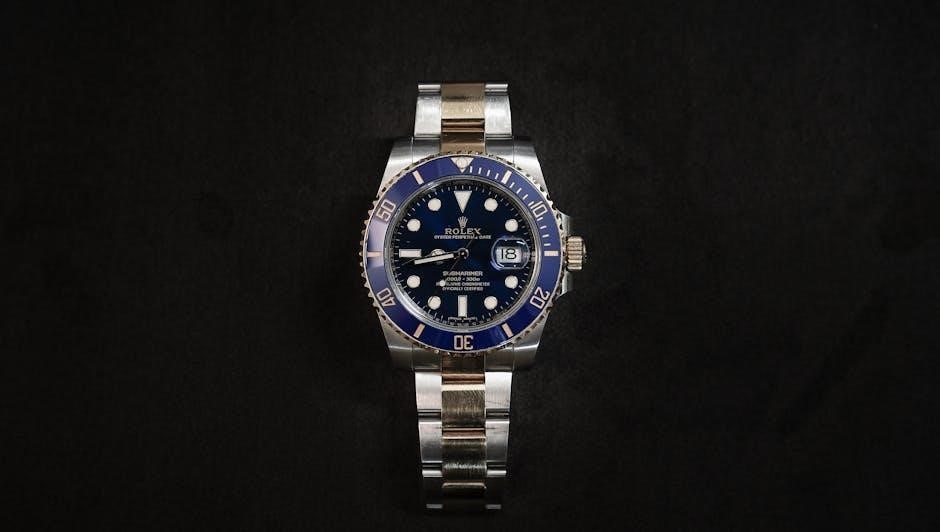
Rolex employs a system of suffixes within reference numbers to denote specific bezel characteristics. “LB” unequivocally signifies “lunette bleu,” indicating a blue bezel insert, prominently featured on models like the 116613LB Submariner when ceramic bezels were introduced. Conversely, “LN” typically denotes a black bezel. These codes aren’t merely aesthetic identifiers; they represent distinct production specifications and can influence a watch’s collectibility.
Beyond these common examples, variations exist, reflecting Rolex’s evolving design choices. Understanding these codes requires careful attention to detail and a grasp of Rolex’s historical practices. The introduction of ceramic bezels, for example, marked a significant shift, often accompanied by the “LB” designation. These suffixes provide valuable clues about a watch’s age, materials, and original configuration, aiding in accurate identification and valuation. Collectors rely on this nuanced system to authenticate and appreciate the intricacies of Rolex timepieces.
Understanding Material Codes in Reference Numbers
Rolex reference numbers intricately encode the materials used in a watch’s construction. The digits within the code reveal whether the case and bracelet are crafted from stainless steel, gold (yellow, white, or Everose), platinum, or a combination thereof. These material designations are fundamental to understanding a watch’s value and characteristics.
For instance, specific number sequences indicate solid gold construction, while others denote two-tone models featuring a combination of steel and gold. Decoding these material codes requires familiarity with Rolex’s conventions. The reference number itself acts as a concise summary of the watch’s composition, offering insight into its weight, durability, and aesthetic appeal. This information is crucial for collectors, appraisers, and anyone seeking to understand the nuances of a particular Rolex model. Knowing the materials allows for accurate identification and appreciation of the craftsmanship involved.

Resources for Identifying Rolex Reference Numbers
Numerous online databases, dedicated Rolex forums, and authorized dealers provide assistance in deciphering reference numbers. These resources offer valuable tools for identification.
Online Rolex Reference Number Databases
Several websites specialize in cataloging Rolex reference numbers, offering a convenient starting point for identification. These databases allow users to search by number and retrieve detailed information about the corresponding model, including production years, case materials, and bezel types. They often feature high-quality images, aiding in visual confirmation.
These online resources are continually updated by enthusiasts and experts, striving for accuracy and completeness. However, it’s important to cross-reference information from multiple sources, as discrepancies can occasionally occur. Some databases focus on specific eras or models, while others aim for comprehensive coverage; Utilizing these tools can significantly streamline the process of understanding a Rolex’s history and specifications.
Remember to consider the source’s reputation and user feedback when relying on online databases. Reputable sites typically cite their sources and encourage community contributions, fostering a collaborative environment. These databases are invaluable for both collectors and those simply curious about their Rolex timepiece.
Rolex Forums and Communities
Rolex forums and online communities represent a wealth of collective knowledge regarding reference numbers and watch identification. These platforms connect enthusiasts, collectors, and experts who readily share their expertise and experiences. Posting a query with a reference number often elicits detailed responses, including production dates, variations, and potential authenticity concerns.
The benefit of these communities lies in their practical, real-world insights. Members frequently discuss specific reference numbers, sharing photos and anecdotes that supplement information found in databases. They can also help decipher anomalies or unusual features. However, it’s crucial to critically evaluate responses and consider the source’s credibility.
Active participation and respectful engagement are key to maximizing the value of these forums. Remember to provide clear photos and detailed descriptions when seeking assistance. These communities are invaluable resources for anyone navigating the complexities of Rolex reference numbers.
Authorized Rolex Dealer Assistance
Seeking assistance from an authorized Rolex dealer provides the most reliable and accurate information regarding reference numbers. Dealers possess direct access to Rolex’s internal databases and are trained to interpret the intricacies of these codes. They can definitively confirm a watch’s model, materials, and original production details.
Furthermore, authorized dealers can verify the authenticity of a watch based on its reference and serial numbers, offering peace of mind to potential buyers. They can also provide documentation and service history associated with a specific timepiece. This is particularly valuable for vintage or pre-owned watches.
While dealer assistance may require a visit or phone call, the expertise and official confirmation they offer are unparalleled. They represent the primary source for accurate Rolex information and can resolve any ambiguities surrounding reference number interpretation.

Common Misconceptions About Rolex Reference Numbers
Many believe reference numbers guarantee authenticity, but they can be faked. New models receive new numbers, and some references endure for decades, creating confusion.
Reference Numbers and Authenticity
While a Rolex reference number is a vital piece of information for identifying a watch, it’s a common misconception that it solely guarantees authenticity. Unfortunately, counterfeiters are increasingly sophisticated and can replicate reference numbers onto fake watches. Therefore, relying on the reference number alone is insufficient for verifying a watch’s genuineness.
A genuine Rolex will have a sharply and precisely engraved reference number located between the lugs at the 12 o’clock position. However, a skilled forger can also replicate this detail. To truly assess authenticity, one must consider multiple factors, including the serial number, the quality of materials, the movement, and the overall craftsmanship.
It’s crucial to purchase from reputable sources, such as authorized Rolex dealers or well-established pre-owned watch retailers with a proven track record. Seeking expert authentication from a qualified watchmaker is also highly recommended before making a significant investment. Remember, a matching reference and serial number doesn’t automatically equate to a genuine Rolex.
New Models, New Numbers: A Constant Evolution
Rolex consistently introduces new models and updates to existing lines, and with each change often comes a new reference number. This isn’t a rigid rule – some models enjoy remarkably long production runs with the same number – but it’s a frequent occurrence. Even subtle alterations, like a change in dial color or bezel material, can warrant a new reference.
The lifespan of a specific reference number can vary dramatically. Some, like the Submariner 5513, were produced for around 25 years, while others, such as the 168000, had shorter runs. This unpredictability makes tracking Rolex references a dynamic process. Collectors often seek out specific references due to their rarity or unique features.
Understanding this constant evolution is key for both collectors and buyers. A new reference number doesn’t necessarily signify a vastly different watch, but it does indicate a change from a previous iteration. Staying informed about these updates ensures accurate identification and valuation of Rolex timepieces.
The Longevity of Certain Reference Numbers
While Rolex frequently introduces new reference numbers with model updates, some enjoy remarkably long production runs. This longevity is a fascinating aspect of Rolex history, creating distinct collecting opportunities. Certain references become iconic, representing a specific era or design philosophy for the brand.
The Submariner reference 5513, produced for approximately 25 years, exemplifies this extended lifespan. Such long runs mean variations within the same reference can exist, offering nuances for collectors to explore. These variations might include dial differences, case styles, or bracelet options.
Conversely, other references, like the 168000, had comparatively shorter production periods. This contrast highlights the unpredictable nature of Rolex’s numbering system. The enduring appeal of long-lived references contributes to their desirability and value within the collector community, making them highly sought-after pieces.