High School Soccer Tryout Plan
A comprehensive plan ensures a fair evaluation, balancing technique, tactics, fitness, and psychological aspects— mirroring a normal practice session for optimal player-coach interaction․
Our tryout process aims to identify players who demonstrate a balanced skillset encompassing technical proficiency, tactical understanding, physical fitness, and mental fortitude—essential qualities for success; The evaluation mirrors a typical training session, fostering a comfortable environment for players to showcase their abilities while allowing coaches to observe them authentically․
We prioritize a fair and transparent assessment, ensuring every athlete receives equal opportunity․ This plan outlines a structured approach, emphasizing objective criteria and consistent evaluation across all candidates, ultimately building a cohesive and competitive team․
II․ Pre-Tryout Preparation
Thorough preparation is crucial for a smooth and effective tryout․ This includes proactive communication with prospective players regarding dates, times, location, and required documentation․ Ensuring all athletes meet eligibility requirements—verified through necessary paperwork—is paramount․
We will establish clear expectations and a streamlined check-in process․ Pre-tryout communication will detail what to bring and what to expect, minimizing confusion and maximizing participation․ A well-organized preparation phase sets the stage for a fair and efficient evaluation process․
A․ Communication with Prospective Players
Clear and timely communication is essential for maximizing tryout attendance and ensuring players are well-prepared․ We will utilize school announcements, email blasts, and the team’s website to disseminate crucial information․ This includes detailed tryout schedules, location specifics, and required documentation․
A comprehensive FAQ document will address common questions, reducing anxiety and streamlining the process․ Reminders will be sent leading up to the tryout, fostering a positive and organized experience for all participants․
B․ Required Documentation & Eligibility Checks
Prior to participation, all prospective players must submit a completed physical examination form, signed parental consent waiver, and proof of current school enrollment․ We will verify academic eligibility based on school district policies, ensuring compliance with all athletic association regulations․
These checks safeguard player well-being and maintain the integrity of the program․ Any incomplete submissions will result in restricted tryout access until rectified, promoting fairness and accountability․
III․ Tryout Staff & Roles
The tryout will be directly overseen by the head and assistant coaches, fostering a genuine evaluation environment—avoiding sideline observation․ Evaluators will objectively assess players across all drills, providing consistent feedback․
Clear role definitions ensure efficient operation and minimize bias․ Staff communication is paramount for accurate player assessments, ultimately contributing to a well-rounded team selection process, mirroring a formal training session․
A․ Head Coach Responsibilities
The Head Coach directs the entire tryout process, ensuring adherence to the established plan and evaluation criteria․ They actively participate in drills, observing players firsthand to gauge skill and potential․
Maintaining a fair and organized environment is crucial, alongside clear communication with staff and prospective athletes․ The Head Coach makes final roster decisions, balancing talent with team needs, mirroring a typical practice session․
B․ Assistant Coach & Evaluator Assignments
Assistant Coaches support the Head Coach, assisting with drill execution and providing supplemental player evaluations․ Evaluators focus on specific skill sets – technical, tactical, or physical – offering detailed observations․
Clear assignment of roles prevents redundancy and ensures comprehensive coverage․ Consistent evaluation criteria are vital for objective assessments, mirroring a formal training session․ Feedback should be concise and focused, aiding final roster decisions․
IV․ Tryout Format & Schedule (2-3 Days)
The tryout will span two to three days, progressively assessing skills․ Day one focuses on technical abilities, day two on tactical awareness through small-sided games, and day three combines fitness with a full-field scrimmage․
This structure mirrors a normal practice, allowing for comprehensive evaluation․ A detailed schedule ensures efficient use of time, providing ample opportunity to observe players in various game-like scenarios․
V․ Day 1: Technical Skills Assessment
The initial day prioritizes individual technical proficiency․ Players will navigate cone drills to demonstrate dribbling speed and control, followed by passing and receiving exercises evaluating short/long range accuracy and first touch․
Shooting accuracy and power will also be assessed․ This focused approach allows evaluators to establish a baseline understanding of each player’s fundamental skills before introducing tactical elements․
A․ Dribbling Drills (Cone Drills, Speed Dribbling)
Cone drills assess agility and close control, requiring players to weave through a set pattern, emphasizing technique and quick changes of direction․ Speed dribbling evaluates the ability to maintain control while moving at pace․
Evaluators observe footwork, ball security under pressure, and the player’s comfort level with the ball at varying speeds․ These drills provide insight into fundamental dribbling capabilities․
B․ Passing & Receiving Drills (Short/Long Passing, First Touch)
Passing drills, both short and long range, gauge accuracy, weight of pass, and vision․ Receiving drills focus on the first touch – controlling the ball effectively to set up the next play․
Evaluators assess technique, ability to pass with both feet, and composure under pressure․ A good first touch demonstrates control and quick thinking, vital for maintaining possession and initiating attacks․
C․ Shooting Accuracy & Power Assessment

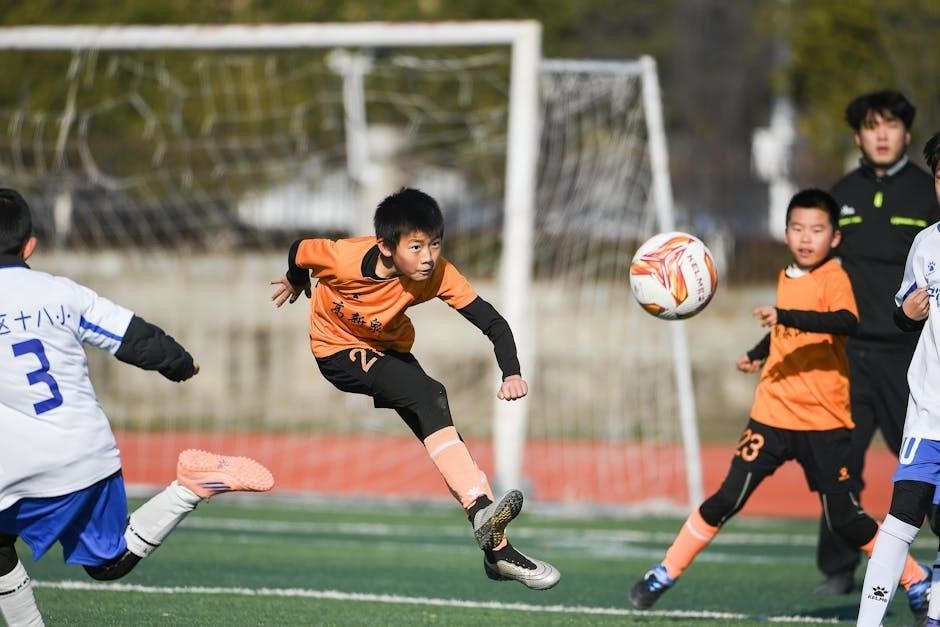
Shooting drills evaluate a player’s ability to strike the ball with precision and force from various distances and angles․ Assess both footwork leading up to the shot and the technique employed during the strike․
Evaluators observe placement, power, and consistency․ Players should demonstrate the ability to shoot with both feet, showcasing versatility and adaptability․ Accuracy is paramount, but power indicates potential for game-winning goals․
VI․ Day 2: Tactical Awareness & Small-Sided Games
Day two focuses on evaluating players’ understanding of positioning, movement, and decision-making within game-like scenarios․ Small-sided games, such as 3v3 and 5v5, create opportunities to observe tactical intelligence․
Coaches assess players’ ability to maintain possession, create scoring chances, and transition effectively between attack and defense․ Observing game intelligence reveals a player’s soccer IQ and adaptability on the field․
A․ Possession-Based Games (3v3, 5v5)
These games prioritize keeping control of the ball, demanding quick thinking and precise passing skills from each player․ 3v3 and 5v5 formats encourage constant movement, supporting angles, and creative solutions under pressure․
Evaluators observe players’ ability to find open spaces, make intelligent runs, and combine effectively with teammates․ This assesses their tactical understanding and contribution to maintaining possession․
B․ Transition Drills (Attacking & Defending Transitions)
These drills focus on the crucial moments when possession changes, evaluating players’ reactions and decision-making speed․ Scenarios simulate winning the ball back and quickly launching attacks, or swiftly reorganizing defensively after losing possession․
Coaches assess players’ ability to immediately switch gears, support teammates, and execute appropriate actions – whether it’s a quick counter-attack or a disciplined defensive shape․
C․ Game Intelligence Observation
Beyond physical skills, assessing ‘soccer IQ’ is vital․ Coaches observe players’ decision-making during small-sided games, noting their positioning, awareness of teammates and opponents, and ability to anticipate play․
Key indicators include recognizing passing lanes, making intelligent runs, supporting attacks, and understanding when to press or drop back defensively․ This evaluates a player’s tactical understanding and overall contribution beyond pure athleticism․
VII․ Day 3: Fitness & Game Simulation
The final day rigorously tests endurance, speed, and agility, culminating in a full-field scrimmage․ Shuttle runs and a distance run assess cardiovascular fitness, while sprints and cone weaving evaluate quickness and change-of-direction ability․
The scrimmage provides a realistic game environment for observing players under pressure, evaluating their technical skills, tactical awareness, and physical capabilities collectively․
A․ Endurance Test (Shuttle Runs, Distance Run)
This section assesses players’ cardiovascular stamina, crucial for sustained performance throughout matches․ Shuttle runs, covering a defined distance repeatedly, measure anaerobic endurance and recovery rate․
A distance run, typically 1․5-2 miles, evaluates aerobic capacity and pacing ability․ Observing fatigue levels and maintaining form provides insight into a player’s overall fitness base and mental fortitude․
B․ Speed & Agility Drills (Sprints, Cone Weaving)
Evaluating explosive power and quickness is vital; these drills directly translate to game performance․ Sprints, over varying distances (10-40 yards), gauge acceleration and maximum speed․
Cone weaving drills assess agility, change-of-direction speed, and ball control under pressure․ Observing technique, footwork, and reaction time provides valuable insights into a player’s athletic capabilities and coordination․
C․ Full-Field Scrimmage (Evaluation in Game Situations)
A full-field scrimmage provides the most realistic assessment of players’ abilities within a game context․ Coaches observe tactical awareness, decision-making under pressure, and how players interact with teammates․
Evaluation focuses on positioning, passing accuracy, defensive responsibilities, and overall game intelligence․ This allows for a comprehensive understanding of each player’s potential contribution to the team, mirroring a typical practice․
VIII․ Evaluation Criteria & Scoring System
A structured scoring system ensures objective player assessment, weighting technical skills (dribbling, passing, shooting), tactical awareness (positioning, decision-making), and physical fitness (speed, endurance, agility)․
Each category receives a predetermined percentage reflecting its importance to the team’s success․ Consistent application of these criteria minimizes bias and facilitates fair comparisons between candidates, aligning with USYouthSoccer․org’s emphasis on balanced qualities․
A․ Technical Skills (Dribbling, Passing, Shooting) – Weighting
Technical proficiency constitutes 40% of the overall score, recognizing its foundational role in gameplay․ Dribbling (15%) assesses ball control and agility, while passing accuracy and range (15%) are crucial for possession․
Shooting power and precision (10%) determine goal-scoring potential․ Evaluators will observe these skills during dedicated drills and small-sided games, ensuring a comprehensive assessment of each player’s technical capabilities․
B․ Tactical Awareness (Positioning, Decision-Making) – Weighting
Tactical understanding accounts for 30% of the evaluation, emphasizing intelligent play beyond individual skill․ Positioning (10%) assesses spatial awareness and defensive/offensive responsibilities․
Decision-making under pressure (20%)—including passing choices and recognizing opportunities—is vital․ Evaluators will observe these aspects during possession games and scrimmages, noting players’ ability to read the game and contribute strategically․
C․ Physical Fitness (Speed, Endurance, Agility) – Weighting
Physical fitness constitutes 25% of the overall score, recognizing its crucial role in high school soccer․ Endurance (10%) will be tested via shuttle runs and a distance run, gauging stamina during prolonged activity․
Speed and agility (15%)—assessed through sprints and cone drills—demonstrate quickness and responsiveness․ These elements are vital for effective transitions and covering ground efficiently during gameplay․
IX․ Player Evaluation Forms & Data Collection
Standardized evaluation forms are essential for objective assessment․ These forms will detail each player’s performance across technical skills, tactical awareness, and physical fitness categories, utilizing a numerical scoring system․
Data collection will include player names, positions, and scores for each drill and scrimmage․ This data will be compiled into a spreadsheet for easy analysis and roster selection, ensuring a transparent and data-driven process․
X․ Communication of Results to Players
The finalized roster will be posted online via the school’s athletic website, ensuring accessibility for all tryout participants․
While not mandatory, offering individual feedback sessions can provide valuable insights for players who weren’t selected․ This demonstrates respect and fosters a positive program culture․ Timely communication is crucial, minimizing anxiety and allowing players to plan accordingly for future opportunities․
A․ Posting of Roster Online
The official team roster will be published on the school’s athletic website, typically within 24-48 hours of the final evaluation․
A clear announcement will accompany the posting, detailing any next steps for players, such as required paperwork or a mandatory team meeting․ Player names will be listed alphabetically by grade level for easy navigation․ Ensure the website is easily accessible to all families․
B․ Individual Feedback (Optional)
While not always feasible due to time constraints, offering individual feedback to players can be beneficial for their development․
This could take the form of a brief email outlining strengths and areas for improvement, or a short one-on-one meeting․ Emphasize constructive criticism and encouragement․ Clearly communicate that tryout decisions are based on overall team needs and not solely on individual potential․
XI․ Dealing with Parent Inquiries
Establish a clear communication protocol for addressing parent questions regarding tryout results․
Direct all inquiries to a designated point person (e․g․, the head coach or athletic director) to ensure consistent messaging․ Prepare a standard response explaining the evaluation criteria and the competitive nature of the selection process․ Politely decline to discuss specific player comparisons, focusing instead on the overall team composition․
XII․ Legal Considerations & Waiver Forms
Ensure all participants (players and parents/guardians) complete and sign necessary waiver forms before tryouts begin․
These forms should address liability for injuries, medical treatment authorization, and photo/video release․ Consult with the school administration and legal counsel to confirm compliance with all relevant state and local regulations regarding student-athlete participation and data privacy․ Maintain secure records of all signed waivers․
XIII․ Emergency Action Plan
Develop a detailed Emergency Action Plan (EAP) outlining procedures for handling injuries, medical emergencies, and inclement weather․

The EAP should include contact information for emergency services, designated first responders (with current certifications), and a clear evacuation route․ Ensure all tryout staff are thoroughly familiar with the EAP and practice drills regularly․ A readily accessible first-aid kit is crucial, alongside knowledge of CPR and AED usage․
XIV․ Equipment Checklist
A comprehensive equipment checklist is vital for a smooth and safe tryout process․
Essential items include multiple soccer balls (various sizes), cones for drills, agility ladders, goals (portable or permanent), first-aid kit, water/hydration supplies, whistles, and clearly marked scrimmage vests․ Ensure adequate space for drills and scrimmages, and verify all equipment is in good working order before the tryout begins․
XV․ Sample Tryout Schedule Template (PDF Format)
A detailed, pre-prepared schedule is crucial for efficient tryout management․
The PDF template will outline timings for each activity – warm-up, technical drills, small-sided games, fitness tests, and full-field scrimmages – across all tryout days․ It includes designated break times and evaluator assignments․ This ensures consistency and fairness, allowing coaches to accurately assess players throughout the process, maximizing evaluation effectiveness․

XVI․ Post-Tryout Team Building Activities
Following selections, fostering team cohesion is paramount for success․
Organize informal activities – a team dinner, a casual scrimmage, or a volunteer event – to build rapport among players․ These events encourage communication and camaraderie, essential for a unified team dynamic․ Prioritize activities that are inclusive and promote positive interactions, establishing a strong foundation for the upcoming season and beyond․