Manual Pipe and Tube Bending: A Comprehensive Guide
Manual benders are cost-effective and accessible‚ yet limited by pipe diameter and wall thickness; they require significant labor for operation and maintenance.
Manual pipe and tube bending represents a foundational skill in various fabrication and construction trades. This technique‚ utilizing hand-operated tools‚ allows for the shaping of metal conduits without the complexities of automated machinery. While offering a cost-effective entry point‚ it demands a thorough understanding of material properties and bending principles.
Historically‚ manual bending has been crucial for projects requiring customized curves or adjustments on-site. However‚ it’s essential to acknowledge the limitations; manual methods are best suited for smaller diameters and thinner walls. Compared to hydraulic or CNC options‚ manual bending is labor-intensive‚ requiring physical strength and precision. Successfully mastering this craft involves selecting the appropriate tooling and employing correct techniques to achieve desired angles and radii while minimizing material distortion or failure.
What is the Difference Between Pipe and Tube?
Understanding the distinction between pipe and tube is crucial for selecting the correct bending techniques and tools. Pipe‚ traditionally defined by its outside diameter (OD)‚ is primarily used for transporting fluids or gases‚ with wall thickness often specified by a schedule number. Tube‚ conversely‚ is typically defined by its outside diameter (OD) and wall thickness.
This difference impacts bending. Pipe’s thicker walls generally require more force and specialized benders‚ while tube’s thinner walls are more amenable to manual methods. Manual benders often handle smaller diameter tubes effectively‚ but larger diameter or thick-walled pipes necessitate hydraulic assistance. The intended application dictates the material choice; pipe for flow‚ tube for structural purposes. Correct identification ensures safe and accurate bending‚ preventing potential failures.
Applications of Manual Pipe and Tube Bending
Manual bending techniques find application in diverse fields‚ particularly where portability and cost-effectiveness are paramount. Exhaust systems in automotive repair frequently utilize manual benders for custom fabrication or replacement of bent sections. Handrails and protective cages benefit from on-site bending‚ eliminating the need for pre-fabricated components.
Smaller-scale projects like furniture frames‚ artistic sculptures‚ and DIY projects are ideal for manual bending. However‚ limitations exist; large-scale industrial applications or projects requiring high precision typically demand automated solutions. The ability to create custom bends in the field makes manual bending invaluable for repairs and modifications where access to specialized machinery is restricted.
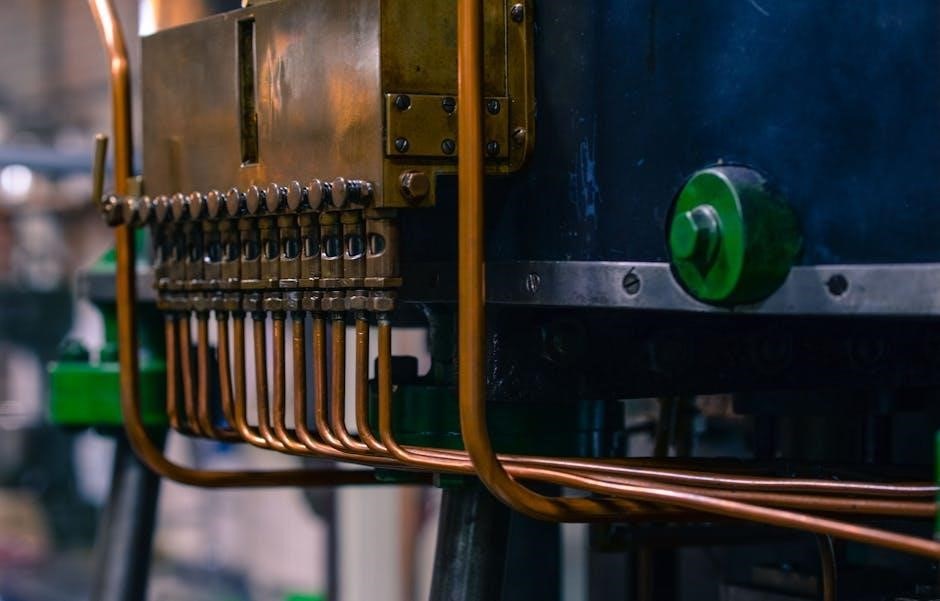
Types of Manual Pipe Benders
Various manual benders exist‚ including lever‚ hick‚ spring‚ and roller types‚ each suited for different pipe sizes and bending requirements‚ offering versatility.
Lever-Type Manual Pipe Benders
Lever-type benders are commonly used for their simplicity and affordability‚ making them a popular choice for smaller projects and DIY enthusiasts. These benders utilize a lever mechanism to apply force to the pipe‚ gradually bending it to the desired angle. They are generally suitable for bending softer metals like copper and aluminum‚ and for smaller diameter pipes with thinner walls.
The operation involves securing the pipe within the bender’s dies and then using the lever to create the bend. While relatively easy to use‚ achieving precise and consistent bends requires skill and experience. Larger diameter pipes or those with thicker walls may prove difficult to bend effectively with a lever-type bender‚ potentially leading to material distortion or failure. They are easily transportable due to their small size and lightweight construction.
Hick-Type Manual Pipe Benders
Hick-type manual pipe benders‚ also known as hand benders‚ are characterized by their robust construction and ability to handle larger diameter pipes compared to lever-type benders. They employ a hinged design with a handle and a die that wraps around the pipe. Applying force to the handle gradually bends the pipe against the die;
These benders are particularly useful for bending rigid materials like steel and are often favored in applications such as exhaust system fabrication and structural work. While requiring more physical effort than lever-type benders‚ they offer greater control and precision. Achieving smooth‚ consistent bends necessitates careful technique and proper die selection. They are known for their durability and relatively low maintenance requirements‚ making them a reliable option for various bending tasks.
Spring-Type Manual Pipe Benders
Spring-type manual pipe benders are distinguished by their compact size and ease of use‚ making them ideal for smaller diameter tubing and lighter-duty applications. These benders utilize a series of springs to apply bending force‚ allowing for relatively smooth and controlled bends. They are particularly well-suited for bending soft materials like copper‚ aluminum‚ and thin-walled steel tubing.
Their lightweight and portable nature makes them a convenient choice for on-site work or situations where space is limited. However‚ spring-type benders typically have a limited bending capacity and are not suitable for larger diameter pipes or thicker wall thicknesses. They are often favored in industries like HVAC and automotive repair for creating precise bends in smaller tubing runs.
Roller-Type Manual Pipe Benders
Roller-type manual pipe benders employ a series of rollers to gradually form the pipe or tube into the desired curvature. These benders are effective for creating consistent bends across a wider range of diameters compared to spring-type benders. They operate by feeding the material through a set of rollers‚ applying pressure to incrementally bend the pipe without kinking or collapsing it.

Roller benders are often preferred for applications requiring larger radius bends or when working with materials that are more prone to deformation. While they require more physical effort than some other types‚ they offer greater control and precision. They are commonly used in fabrication shops and construction sites for bending conduit‚ exhaust pipes‚ and structural tubing.
Bending Techniques & Methods
Ram and rotary draw bending are key techniques; ram suits small angles‚ while rotary draw excels with larger bends‚ influencing machine investment choices.
Ram Tube Bending for Small Angles
Ram tube bending is a straightforward method ideal for achieving minor bends in tubing. This technique utilizes a fixed form or die around which the tube is bent‚ with a ram applying force to initiate the curve. It’s particularly well-suited for applications requiring gentle arcs or adjustments where precision isn’t paramount.
However‚ ram bending has limitations. It’s generally less effective for larger bend angles‚ as it can lead to ovality or distortion of the tube. The process relies heavily on manual effort‚ making it less efficient for high-volume production. Furthermore‚ achieving consistent results requires skill and experience‚ as variations in force application can impact the final bend shape. Despite these drawbacks‚ ram bending remains a valuable technique for smaller projects and quick adjustments due to its simplicity and minimal tooling requirements.
Rotary Draw Tube Bending for Large Angles
Rotary draw tube bending excels at creating substantial bends in tubing‚ surpassing the capabilities of ram bending for larger angles. This method involves clamping the tube securely and rotating it around a curved die‚ while a draw die simultaneously pulls the tube along the bend radius. This coordinated action minimizes distortion and maintains a consistent wall thickness throughout the bend.
Investing in a machine facilitating this process is advisable when large bends are frequently required. While manual rotary draw benders exist‚ they demand significant physical exertion. Achieving precise‚ repeatable bends necessitates careful setup and operation. Though more complex than ram bending‚ rotary draw bending delivers superior results for complex geometries and larger-radius curves‚ making it a preferred choice for demanding applications.
Hot Bending vs. Cold Bending
Hot bending and cold bending represent distinct approaches to manual pipe and tube manipulation. Cold bending‚ performed at room temperature‚ is simpler and more common for thinner-walled materials and smaller diameters. However‚ it requires greater force and can induce springback‚ potentially compromising accuracy.
Hot bending involves preheating the pipe or tube‚ reducing its yield strength and making it more pliable. This method is crucial for thicker walls and larger diameters‚ minimizing the force needed and reducing the risk of cracking or deformation. While hot bending demands careful temperature control and safety precautions‚ it yields tighter radii and improved bend quality. The choice depends on material properties‚ desired bend characteristics‚ and available resources.
Mandrel Bending Considerations
Mandrel bending‚ though typically associated with automated systems‚ influences manual bending strategies. It utilizes an internal support – the mandrel – to prevent collapse during forming‚ crucial for maintaining roundness and wall thickness‚ especially with thin-walled tubes. While fully automated mandrel bending isn’t feasible with purely manual tools‚ understanding the principle informs technique.
When manually bending‚ particularly with tighter radii‚ mimicking mandrel support is vital. This can involve packing the tube with sand or specialized fillers to resist deformation. Careful die selection and controlled bending speed are also essential. Ignoring these considerations leads to ovality‚ wrinkles‚ and compromised structural integrity. Achieving quality bends manually necessitates a deep understanding of mandrel bending principles.

Factors Affecting Bend Quality
Material‚ wall thickness‚ bend radius‚ and tooling significantly impact results; precise selection and control are essential for achieving accurate‚ defect-free manual bends.
Pipe/Tube Material and Wall Thickness
The material’s properties profoundly influence bending success with manual tools. Softer materials like aluminum and thin-walled steel are easier to manipulate than harder alloys or thicker-walled pipes. Manual benders often struggle with substantial diameters and robust wall thicknesses‚ potentially leading to deformation or failure.
Specifically‚ attempting to bend thick-walled pipes manually demands significantly more force‚ exceeding the capacity of many lever or spring-type benders. This can result in kinking‚ ovalization‚ or even cracking of the material. Conversely‚ thin-walled tubes are more susceptible to buckling during the bending process‚ necessitating careful technique and appropriate support to maintain roundness.
Choosing the correct tooling and applying gradual‚ controlled pressure are crucial when working with varying materials and wall thicknesses to ensure a quality bend.
Bend Radius and Diameter
The bend radius‚ relative to the pipe or tube diameter‚ significantly impacts the feasibility and quality of manual bending. Smaller bend radii require considerably more force and increase the risk of material deformation‚ especially with thicker walls. Manual benders are generally better suited for larger radius bends‚ minimizing stress concentration.
Similarly‚ the pipe’s diameter presents limitations. Manual benders‚ particularly lever and spring types‚ have a maximum diameter capacity. Exceeding this limit compromises control and increases the likelihood of bending errors. Larger diameter pipes necessitate more robust bending equipment‚ like hydraulic or CNC machines.
Careful consideration of these factors is vital; attempting bends beyond a manual bender’s capabilities can lead to material failure or an unacceptable bend quality.
Tooling and Die Selection
Proper tooling – including bending dies – is crucial for achieving accurate and consistent bends with manual pipe benders. Dies must precisely match the outer diameter of the pipe or tube being bent to prevent deformation and ensure a smooth bend. A variety of die sizes are typically required to accommodate different materials and diameters.
The die material should be sufficiently strong to withstand the bending forces without cracking or wearing prematurely. Selecting the correct die profile (radius) is equally important‚ directly influencing the final bend shape. Incorrect tooling can lead to ovality‚ wrinkles‚ or even complete material failure.
Regular inspection and maintenance of dies are essential for maintaining bend quality and extending their lifespan.

Advantages and Disadvantages of Manual Benders
Manual benders offer cost-effectiveness and simplicity‚ but are limited in capacity‚ require significant effort‚ and lack the precision of powered alternatives;
Cost-Effectiveness and Accessibility
Manual pipe benders stand out due to their remarkably low initial cost‚ making them an attractive option for hobbyists‚ small workshops‚ or projects with limited budgets. Compared to hydraulic or CNC bending machines‚ the financial investment is significantly lower‚ eliminating the need for substantial capital expenditure.
Furthermore‚ these benders are widely accessible; they are readily available from various suppliers and often require minimal setup or installation. Their portability is another key advantage‚ as their smaller size and lighter weight allow for easy transportation to different job sites. This accessibility‚ combined with the lower price point‚ makes manual bending a viable solution for a broad range of applications where high-volume production or extreme precision aren’t critical.
Limitations in Pipe Diameter and Wall Thickness
Manual pipe benders‚ while versatile‚ possess inherent limitations regarding the size and strength of materials they can effectively handle. Generally‚ they are best suited for bending pipes and tubes with smaller diameters and thinner wall thicknesses. Attempting to bend larger diameter or thicker-walled materials can require excessive force‚ potentially leading to material failure or damage to the bender itself.
These benders struggle with rigid materials‚ making precise bends challenging. The manual effort required increases dramatically with material size‚ reducing efficiency and control. For substantial projects demanding larger bends or robust materials‚ hydraulic or CNC bending machines offer superior capabilities‚ overcoming these limitations and ensuring consistent‚ high-quality results.
Labor Intensity and Efficiency
Manual pipe bending is notably labor-intensive‚ demanding significant physical exertion from the operator. Each bend requires substantial force applied through levers or other mechanical means‚ making it a physically demanding process‚ especially for repetitive tasks or larger projects. This reliance on manual power inherently limits efficiency compared to automated systems.
The time required to complete bends is considerably longer with manual benders‚ impacting overall productivity. While cost-effective initially‚ the increased labor costs associated with manual bending can offset these savings over time. For high-volume production or projects requiring consistent precision‚ automated solutions like hydraulic or CNC benders offer a far more efficient and cost-effective approach.
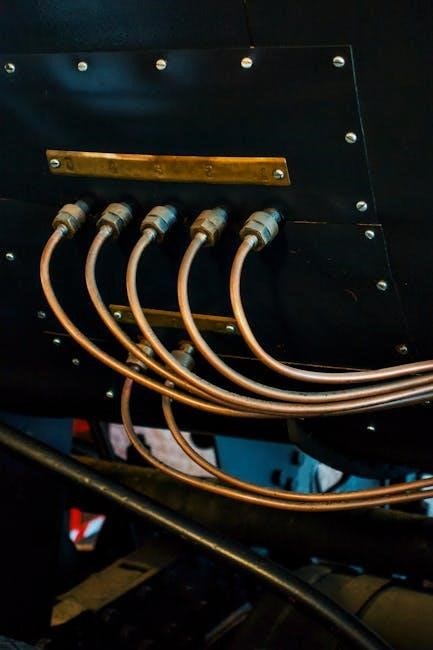
Comparison with Other Bending Machines
Compared to hydraulic or CNC machines‚ manual benders offer lower costs and simpler maintenance‚ but lack the precision‚ power‚ and efficiency of automated systems.
Manual vs. Hydraulic Pipe Benders
Manual pipe benders represent a cost-effective entry point‚ being lightweight and easily transportable‚ ideal for smaller projects and limited budgets. However‚ they demand substantial manual effort‚ making them less efficient for high-volume work or larger diameter pipes.
Hydraulic pipe benders‚ conversely‚ offer a significant advantage in power and ease of use. While representing a higher initial investment‚ they drastically reduce the physical strain on the operator and can handle thicker walls and larger diameters with greater precision.
The choice hinges on project scale and frequency; manual benders suit occasional‚ small-scale bending‚ while hydraulic benders are preferable for consistent‚ demanding applications where efficiency and precision are paramount. Repair costs are generally lower for manual options.
Manual vs. CNC/NC Pipe Bending Machines
Manual pipe benders excel in affordability and simplicity‚ requiring minimal technical expertise for operation and maintenance‚ offering advantages in repair costs. They are suitable for low-volume‚ straightforward bending tasks where precision isn’t critical. However‚ they are inherently limited in repeatability and complexity.
CNC/NC pipe bending machines represent a substantial investment‚ but deliver unparalleled precision‚ repeatability‚ and automation. These machines can handle intricate bends and complex geometries with ease‚ significantly increasing production efficiency.
The key distinction lies in automation and complexity. Manual bending is ideal for one-off projects‚ while CNC/NC machines are essential for mass production and intricate designs demanding consistent‚ high-quality results.
Maintenance and Repair Costs
Manual pipe benders generally boast significantly lower maintenance and repair costs compared to their automated counterparts. Their simple mechanical design translates to fewer components prone to failure‚ reducing the need for specialized technicians or expensive replacement parts. Ordinary tube benders have lower technical difficulties in after-sales maintenance.
Routine maintenance typically involves lubrication of moving parts and occasional inspection for wear and tear. Repairs‚ when needed‚ are often straightforward and can be performed with basic tools and skills.
However‚ the labor-intensive nature of manual bending can contribute to increased wear on the tooling over time. Despite this‚ the overall lifecycle cost remains comparatively low‚ making them an economical choice for smaller operations or infrequent bending needs.
Safety Precautions for Manual Bending
Always utilize proper PPE‚ ensure a safe work area‚ and be mindful of potential material failure during manual bending operations to prevent injuries.
Proper Personal Protective Equipment (PPE)
When engaging in manual pipe and tube bending‚ prioritizing personal safety is paramount. Essential PPE includes sturdy work gloves to protect hands from abrasions and sharp edges during handling of materials and operation of the bending tools. Safety glasses or a face shield are crucial to shield eyes from flying debris that may occur‚ especially when dealing with certain materials or bending techniques.
Furthermore‚ wearing appropriate footwear‚ such as steel-toe boots‚ provides protection against accidental drops or impacts. Depending on the work environment and potential hazards‚ hearing protection might also be necessary. It’s vital to inspect all PPE before each use‚ ensuring it’s in good condition and fits properly. Remember‚ consistent use of the correct PPE significantly reduces the risk of injuries during manual bending processes.
Work Area Safety
Maintaining a safe work area is critical when performing manual pipe and tube bending. Ensure the bending area is well-lit and free from obstructions like tools‚ materials‚ or debris that could create tripping hazards. A clean and organized workspace promotes efficiency and reduces the risk of accidents. Securely clamp or anchor the manual bender to a stable surface to prevent it from shifting during operation‚ ensuring consistent and controlled bending.
Adequate space should be available around the bender to allow for comfortable movement and manipulation of the pipe or tube. Clearly mark the work area to alert others to the ongoing bending operation. Regularly inspect the floor for spills or slippery substances and address them immediately. A safe work environment contributes significantly to preventing injuries and ensuring a successful bending process.
Avoiding Material Failure
Preventing material failure during manual bending requires careful consideration of several factors. Exceeding the material’s yield strength can cause cracking or deformation‚ so understanding the pipe or tube’s limitations is crucial. Avoid bending beyond the recommended bend radius for the specific material and wall thickness; tighter bends increase stress concentration. Inspect the material for pre-existing flaws‚ such as scratches or dents‚ which can initiate failure during bending.
Slow‚ controlled bending is essential to distribute stress evenly and minimize the risk of cracking. Proper lubrication can reduce friction and prevent galling‚ especially with certain materials. If encountering excessive resistance‚ stop immediately and reassess the setup – forcing the bend can lead to catastrophic failure.