Mechanical watches, both manual and automatic, represent a captivating blend of tradition and engineering. They offer a tangible connection to time, diverging from the convenience of quartz technology and smartwatches.
The resurgence in popularity stems from appreciating craftsmanship, history, and the intricate movements within these timepieces – a deliberate choice against disposable technology.
The Resurgence of Mechanical Watches
The renewed interest in mechanical watches, encompassing both manual and automatic varieties, isn’t merely a nostalgic trend; it’s a conscious rejection of our increasingly digital world. Consumers are seeking authenticity and a connection to tangible craftsmanship, values embodied by these intricate timepieces.
This revival is fueled by a desire for something beyond simple time-telling. Mechanical watches represent a legacy of skill, precision, and artistry. The daily ritual of winding a manual watch, or the subtle motion of an automatic’s rotor, fosters a unique engagement absent in digital alternatives.
Furthermore, the appeal extends to collectors and enthusiasts who appreciate the complexity and beauty of the movements themselves, often showcased through transparent casebacks. It’s a statement of individuality and a celebration of horological heritage.
Defining Manual (Hand-Wound) and Automatic Watches
Mechanical watches fundamentally rely on a mainspring storing energy, powering the hands. Manual (hand-wound) watches require the wearer to periodically wind this spring by turning the crown, replenishing its power reserve – typically around 40-72 hours. This deliberate act creates a direct link between owner and timepiece.
Automatic watches, conversely, utilize a rotor that spins with wrist movement, automatically winding the mainspring. This eliminates the need for daily winding, offering continuous operation as long as worn regularly.
Essentially, both types share the same core mechanics, but differ in their winding method – one requiring active participation, the other offering self-sufficiency.

The Mechanics of Manual Watches
Manual watches depend on the user’s consistent winding to compress the mainspring, storing potential energy. This energy then slowly releases, powering the watch’s intricate gears and hands.
How Manual Winding Works
The process of manually winding a watch involves rotating the crown, which is connected to the mainspring barrel. This action carefully coils the mainspring, storing potential energy – the power source for the watch.
Each turn of the crown increases the tension within the mainspring. This stored energy is then released gradually through a series of gears, regulating the movement of the hands and displaying the time.
Unlike automatic watches, manual winding requires deliberate, daily interaction. This ritual fosters a unique connection between the wearer and the timepiece, appreciating the mechanical process and the tangible act of bringing the watch to life.
The History and Tradition of Manual Watches
Manual watches represent the earliest form of mechanical timekeeping, tracing their origins back to the 16th century. These initial timepieces were entirely hand-wound, requiring daily attention to maintain their operation.
For centuries, they were the standard, embodying precision engineering and skilled craftsmanship. They became symbols of status and sophistication, meticulously crafted by watchmakers.
Even with the advent of automatic movements, manual watches retained a dedicated following, valued for their simplicity, connection to horological tradition, and the intimate relationship they foster between the wearer and the watch itself. They continue to be celebrated by enthusiasts today.
Advantages of Manual Watches
Manual watches offer distinct advantages appealing to a specific type of watch enthusiast. The daily ritual of winding creates a unique connection to the timepiece, fostering engagement with time itself.
Typically, manual watches boast simpler constructions, often allowing for thinner case profiles – a desirable trait for dress watches. This simplicity can also translate to more affordable entry points into mechanical watch ownership.
Furthermore, the lack of a rotor simplifies servicing and potentially reduces long-term maintenance costs. They represent a deliberate, tactile experience, valued by those appreciating tradition and craftsmanship.
Daily Ritual and Connection to Time
Winding a manual watch each day transcends mere functionality; it becomes a deliberate ritual. This daily interaction fosters a tangible connection between the wearer and the timepiece, a feeling absent in self-winding or quartz watches.
This ritual encourages mindfulness and an appreciation for the passage of time. It’s a moment to pause, connect with the mechanics, and acknowledge the craftsmanship within. This intimate relationship elevates watch ownership beyond simply telling time.
For many, this daily winding isn’t a chore, but a cherished practice, solidifying the bond with their mechanical companion.
Typically Simpler Construction & Potential for Thinness
Manual watches, lacking the self-winding mechanism, generally boast a simpler construction. This streamlined design translates to fewer components, potentially enhancing reliability and easing future servicing. The absence of a rotor and associated gearing allows for a thinner movement profile.
This inherent simplicity is a significant advantage for watchmakers aiming to create exceptionally slim timepieces. A thinner movement directly contributes to a sleeker case, appealing to those who prefer understated elegance and comfort on the wrist.
Consequently, manual watches often excel in achieving remarkable thinness, a characteristic highly valued in horological circles.
Often More Affordable Entry Point
Manual watches frequently present a more accessible entry point into the world of mechanical timekeeping. The simplified construction, devoid of the automatic winding mechanism, typically results in lower manufacturing costs. This cost-effectiveness is passed on to the consumer, making them an attractive option for newcomers.
For those intrigued by mechanical movements but hesitant to invest heavily, a manual watch offers a chance to experience the charm and craftsmanship without a substantial financial commitment. It’s a gateway to appreciating the artistry of horology.
This affordability doesn’t necessarily equate to lower quality; many excellent manual watches offer exceptional value.
The Mechanics of Automatic Watches
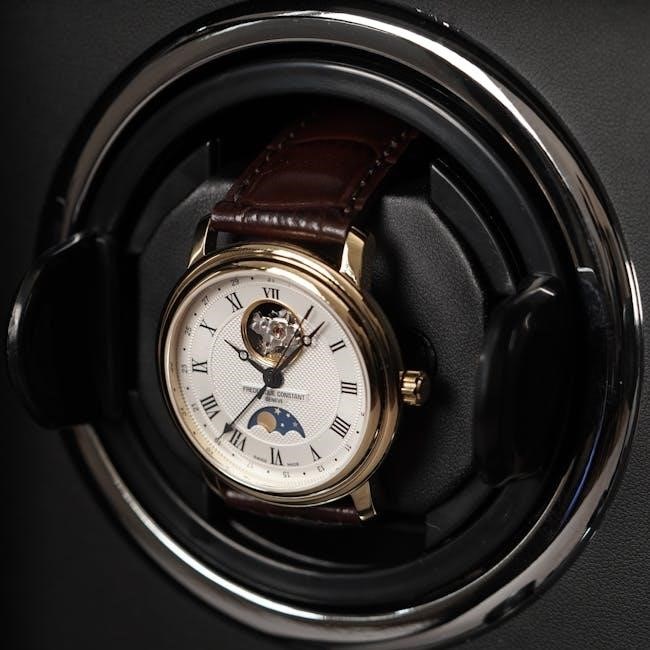
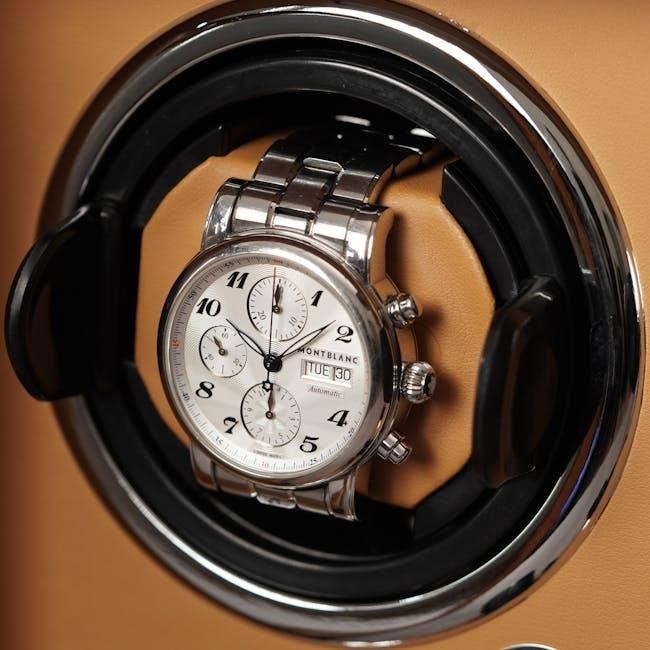
Automatic watches utilize a rotor that harnesses kinetic energy from wrist movements to wind the mainspring, eliminating the need for manual winding – a marvel of engineering!
The Rotor and Self-Winding Mechanism
The heart of an automatic watch lies in its rotor, a weighted metal component that spins with natural wrist motion. This rotation efficiently winds the mainspring, storing energy to power the watch. Unlike manual watches requiring daily winding, automatics continuously replenish their power reserve through everyday wear.
The self-winding mechanism isn’t a simple direct connection; it often incorporates a system of gears and clutches. These components prevent overwinding and allow for bidirectional winding, maximizing energy capture. This ingenious design ensures consistent operation, offering convenience and a fascinating display of horological innovation. It’s a testament to modern engineering!
The Evolution of Automatic Movements
Automatic movements didn’t emerge fully formed; their development was a gradual process spanning decades. Early attempts at self-winding mechanisms date back to the 18th century, but reliable and practical designs didn’t appear until the late 19th and early 20th centuries. Abraham-Louis Breguet is credited with early innovations.

Significant advancements followed throughout the 20th century, improving efficiency, durability, and accuracy. Modern automatic movements often feature sophisticated materials and construction techniques. Today’s designs showcase intricate finishing and innovative features, representing a pinnacle of watchmaking expertise and a continuous refinement of a brilliant concept.
Advantages of Automatic Watches
Automatic watches offer a compelling blend of convenience and horological artistry. Their self-winding mechanism, powered by the wearer’s motion, eliminates the daily ritual of manual winding, ensuring continuous operation. This is a significant benefit for those seeking a “set-it-and-forget-it” experience.
Furthermore, modern automatic movements represent significant engineering innovation, often incorporating advanced materials and designs. Reduced user intervention allows for consistent timekeeping without daily attention. The inherent complexity and craftsmanship contribute to a sense of prestige and lasting value, appealing to watch enthusiasts and collectors alike.
Convenience and Continuous Operation
Automatic watches truly shine in their effortless functionality. The rotor, constantly moving with wrist motion, continuously winds the mainspring, eliminating the need for daily manual winding. This convenience is a major draw for many watch wearers, offering uninterrupted timekeeping without conscious effort.
This continuous operation is particularly advantageous for individuals who wear their watches regularly. It removes a potential oversight – forgetting to wind a manual watch – and ensures the timepiece remains accurate and functional. The self-winding nature embodies a modern approach to traditional watchmaking, blending reliability with ease of use.
Reduced Need for User Intervention
Automatic watches minimize the interaction required from the wearer beyond simply wearing the watch. Unlike manual watches demanding a daily winding ritual, automatics largely operate independently. This “set it and forget it” aspect appeals to those seeking a low-maintenance timepiece;
The self-winding mechanism significantly reduces the need for user intervention, making them ideal for active lifestyles or for individuals who prefer not to incorporate a daily task into their routine. This lessened dependency fosters a seamless experience, allowing the wearer to focus on their day without constantly considering the watch’s power reserve.
Modern Engineering and Innovation
Automatic watches showcase remarkable advancements in mechanical engineering. The rotor system, a key innovation, efficiently converts kinetic energy from wrist movements into power for the mainspring. This intricate mechanism demonstrates a sophisticated understanding of physics and precision manufacturing.
Contemporary automatic movements often incorporate advanced materials and designs, enhancing durability and accuracy. Manufacturers continually refine these systems, exploring new alloys, lubrication techniques, and escapement designs. This commitment to innovation ensures automatic watches remain at the forefront of horological technology, blending tradition with cutting-edge advancements.
Comparing Accuracy and Maintenance
Both manual and automatic watches require periodic servicing, typically every 3-5 years, to ensure optimal performance and longevity. Accuracy can vary, but both types are susceptible to deviations.
Accuracy: Manual vs. Automatic
Determining superior accuracy between manual and automatic watches isn’t straightforward; both rely on the consistent performance of intricate mechanical components. Generally, a well-regulated manual watch can achieve slightly higher accuracy due to fewer internal parts and less complexity in the movement.
However, this is heavily dependent on consistent winding and the quality of the watchmaker. Automatic watches, while convenient, introduce the rotor and self-winding mechanism, potentially adding slight variations in power delivery. These variations can subtly impact timekeeping.
Modern advancements have significantly narrowed the gap, with high-grade automatic movements rivaling manual counterparts. Ultimately, accuracy hinges more on the quality of construction, regulation, and regular servicing than the winding method itself.
Servicing and Maintenance Requirements
Both manual and automatic watches necessitate periodic servicing to ensure optimal performance and longevity. Generally, a full service every 5-7 years is recommended, involving disassembly, cleaning, lubrication, and regulation. Automatic watches, due to their more complex self-winding mechanism, may require slightly more frequent attention.
The rotor and associated gears experience continuous wear, potentially needing replacement or adjustment sooner than components in a simpler manual movement. However, neglecting regular winding in a manual watch can lead to solidified lubricants, requiring more extensive cleaning during servicing.
Regardless of type, avoiding shocks, moisture, and extreme temperatures is crucial for minimizing maintenance needs and preserving the watch’s value.
Longevity and Potential Repairs
With proper care, both manual and automatic mechanical watches can endure for generations. Their robust construction, utilizing durable materials, contributes to their potential lifespan; However, the complexity of automatic movements introduces more potential points of failure compared to the simpler design of manual watches.
Repairs on automatic watches often involve the rotor mechanism, self-winding gears, or the automatic winding module itself, potentially increasing repair costs. Manual watches, while simpler, can still require balance wheel adjustments, mainspring replacements, or gear train repairs.
Access to skilled watchmakers is vital for both, ensuring accurate diagnosis and quality repairs, preserving the watch’s functionality and value over time.
Aesthetic and Style Considerations
Design choices often differentiate manual and automatic watches; manual watches lean towards classic, dressier styles, while automatics accommodate sportier, more modern aesthetics.
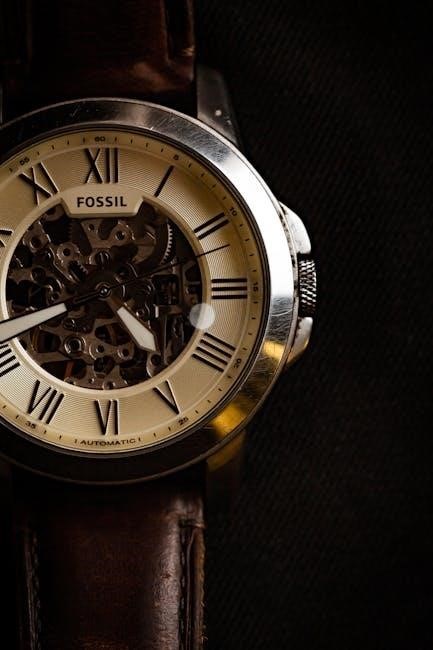
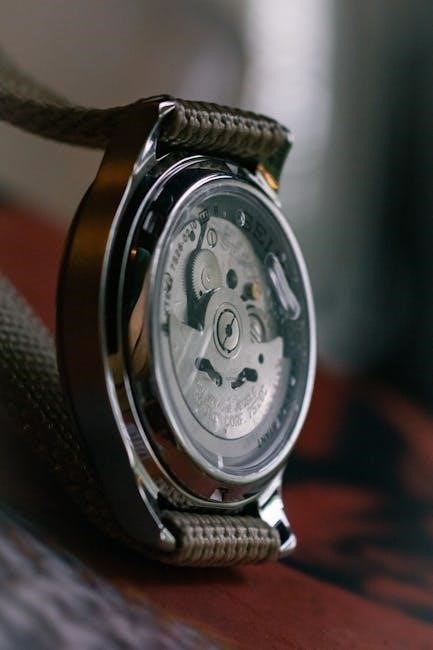
Transparent casebacks showcasing the movement are common in automatics, adding visual interest and highlighting the intricate mechanics.
Design Differences: Manual vs. Automatic
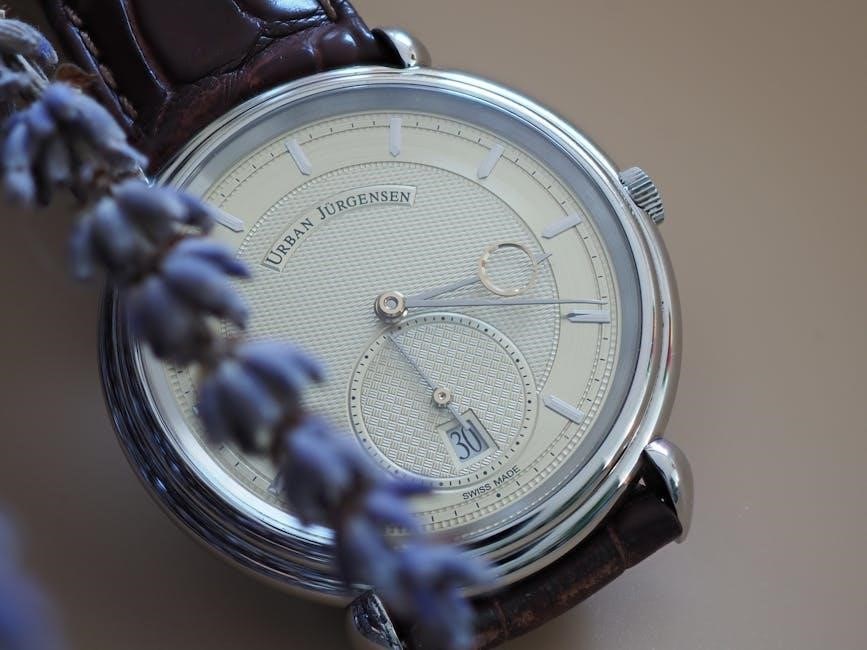
Stylistically, manual and automatic watches frequently diverge, reflecting their mechanical natures and intended uses. Manual watches, often favored by those appreciating tradition, tend towards slimmer profiles and more classic designs – think elegant dress watches with minimalist dials. This simplicity allows the focus to remain on the craftsmanship and the act of winding.
Automatic watches, benefiting from the rotor and self-winding mechanism, can accommodate bolder designs and more robust cases. They frequently appear as sporty chronographs or dive watches, where a thicker case and greater functionality are desired. The design language often emphasizes modern engineering and a more active lifestyle. Ultimately, the aesthetic choice depends on personal preference and the desired overall look.
Caseback Transparency and Movement Display
A key design element differentiating manual and automatic watches is the caseback. While not exclusive to either type, transparent casebacks – showcasing the intricate movement within – are particularly common in both. This feature allows enthusiasts to admire the hand-finished components and the rhythmic operation of the escapement.
Transparent casebacks are often found on higher-end manual watches, highlighting the artistry of traditional watchmaking. For automatics, they reveal the rotor in motion, a visual testament to the self-winding mechanism. Solid casebacks remain prevalent, offering a more classic aesthetic and potentially greater protection, but they obscure the captivating view of the inner workings.
Matching the Watch to Your Lifestyle
Choosing between a manual and automatic watch hinges on your daily routine and preferences. A manual watch suits those who appreciate a daily ritual – the act of winding connects you to the timepiece. It’s ideal for individuals who don’t wear a watch every day, avoiding the need for constant winding when not in use.
Automatic watches excel in active lifestyles, continuously winding with wrist movement. They’re perfect for those who wear a watch consistently and desire hassle-free operation. Consider your wardrobe too; manual watches often lean towards dressier styles, while automatics span a broader range, from sporty to elegant.
Cost and Investment
Generally, manual watches offer a more accessible entry point to mechanical timekeeping, with prices often lower than comparable automatic models due to simpler construction.
However, both types exhibit wide price ranges, influenced by brand prestige, materials, and complications.
Price Ranges for Manual Watches
Manual watches demonstrate a broad spectrum of pricing, catering to diverse budgets and preferences. Entry-level options, from microbrands or vintage finds, can begin around $200-$500, offering a taste of mechanical watch ownership without significant investment.
Mid-range manual watches, typically from established brands with refined finishing and reliable movements, generally fall within the $500-$2,000 range. These often feature classic designs and robust construction.
At the higher end, exceeding $2,000, you’ll find exquisitely crafted manual watches from prestigious manufacturers, incorporating precious metals, intricate complications, and exceptional hand-finishing, potentially reaching tens of thousands of dollars.
The final cost is heavily influenced by brand recognition, materials used, and the complexity of the movement.
Price Ranges for Automatic Watches
Automatic watches generally command a slightly higher price point compared to their manual counterparts, reflecting the added complexity of the self-winding mechanism. Affordable automatic options start around $300-$700, often from brands focusing on value and accessibility.
The $700-$3,000 range presents a wealth of choices from well-respected brands, offering Swiss or Japanese movements, sapphire crystals, and diverse styles. This is a sweet spot for many enthusiasts.
Luxury automatic watches easily surpass $3,000, with prices escalating rapidly based on brand prestige, complications, and materials – easily reaching $10,000 or more.
Investment in automatic movements often reflects the engineering and innovation inherent in their design.
Resale Value and Collectibility
Resale value for both manual and automatic watches is heavily influenced by brand recognition, condition, rarity, and historical significance. Generally, well-maintained watches from established brands – like Rolex, Omega, or Patek Philippe – hold their value remarkably well.
Vintage manual-wind watches, particularly those with unique designs or provenance, can command high prices among collectors. Automatic watches with in-house movements or limited editions also exhibit strong collectibility.
However, mass-produced models may depreciate more significantly. A watch’s service history and original packaging also impact its resale potential, making documentation crucial.
Ultimately, passion and careful selection drive long-term value.
The Role of Craftsmanship
Exceptional craftsmanship defines high-end mechanical watches, involving hand-finishing, meticulous decoration, and skilled watchmaker expertise – elevating timekeeping to an art form.
Hand Finishing and Decoration
Hand finishing elevates a mechanical watch beyond mere functionality, showcasing the watchmaker’s skill and dedication. Techniques like Côtes de Genève striping, perlage (circular graining), and anglage (beveling) are applied to movement components.
These aren’t merely aesthetic; they demonstrate precision and attention to detail. Polished screw heads, blued screws, and hand-engraved designs further enhance the visual appeal. While both manual and automatic watches can receive this treatment, the visibility often differs.
Manual watches, sometimes simpler in construction, can showcase finishing more prominently. Automatic watches, with more complex rotors, may focus decoration on visible areas, creating a captivating display through exhibition casebacks.
Swiss Made vs. Other Origins
“Swiss Made” carries significant weight in watchmaking, representing a tradition of precision, quality, and craftsmanship. Strict regulations govern its use, requiring a substantial portion of the watch’s value to originate in Switzerland and final assembly to occur there.
However, excellent mechanical movements are also produced in Japan, Germany, and other countries. Japanese movements are known for their reliability and innovation, while German movements often emphasize robust construction and unique designs.
The origin doesn’t inherently dictate quality, but Swiss-made watches often command a premium due to their heritage and stringent standards. Both manual and automatic watches benefit from this global diversity in manufacturing expertise.
The Value of a Skilled Watchmaker
A skilled watchmaker is crucial for both manual and automatic watches, ensuring longevity and accurate timekeeping. These artisans possess the knowledge to diagnose, repair, and restore intricate movements, often working with tiny components and specialized tools.
Regular servicing by a qualified watchmaker is essential, typically every 5-7 years, to clean, lubricate, and adjust the mechanism. They can identify worn parts and perform necessary repairs, preventing more significant issues.
The expertise of a watchmaker extends beyond repair; they can also customize and personalize timepieces, enhancing their value and sentimental worth. Their skill preserves the art of mechanical watchmaking.
Modern Trends and Innovations
New materials like silicon and carbon fiber are enhancing durability and performance in both manual and automatic watches, alongside increasingly complex complications.
New Materials in Watchmaking
The pursuit of enhanced performance and aesthetics drives innovation in watchmaking materials. Beyond traditional stainless steel and gold, manufacturers are increasingly utilizing cutting-edge substances in both manual and automatic movements and cases.
Silicon balance springs, for example, offer superior precision and resistance to magnetism compared to traditional materials. Carbon fiber is employed for lightweight yet incredibly strong cases, appealing to those seeking a sporty aesthetic. Titanium provides a robust and hypoallergenic option.
Ceramic is gaining traction for its scratch resistance and unique visual qualities. These advancements aren’t limited to movement components; they extend to dials, hands, and straps, pushing the boundaries of design and functionality in modern timepieces.
Complications in Manual and Automatic Watches
Complications – features beyond basic time-telling – elevate mechanical watches to horological artistry, appearing in both manual and automatic models. These can range from simple date displays to incredibly complex perpetual calendars and tourbillons.
Manual watches, often slimmer due to simpler movements, can accommodate complications, though space constraints may exist. Automatic watches, with their rotor, generally offer more room for intricate mechanisms, allowing for more elaborate complications.
Chronographs (stopwatches), moon phase indicators, and minute repeaters are popular choices. The addition of complications significantly impacts cost and complexity, showcasing the watchmaker’s skill and ingenuity, regardless of winding method.
The Impact of Smartwatches on Mechanical Watch Demand
Smartwatches initially posed a threat to the mechanical watch market, offering digital convenience and a multitude of features. However, the demand for mechanical timepieces – both manual and automatic – has proven surprisingly resilient.
Instead of replacing mechanical watches, smartwatches have carved out a separate niche. Mechanical watches appeal to those seeking craftsmanship, heritage, and a connection to traditional watchmaking, values smartwatches cannot replicate.
Many watch enthusiasts now own both, utilizing smartwatches for functionality and mechanical watches for style and appreciation of horological art. The rise of smartwatches may have even increased awareness and interest in mechanical timekeeping.